(A Generous Description)
If you’ve been following along, you know I’m currently waiting on JET results and doing my best to stay productive. This is what productive looks like.
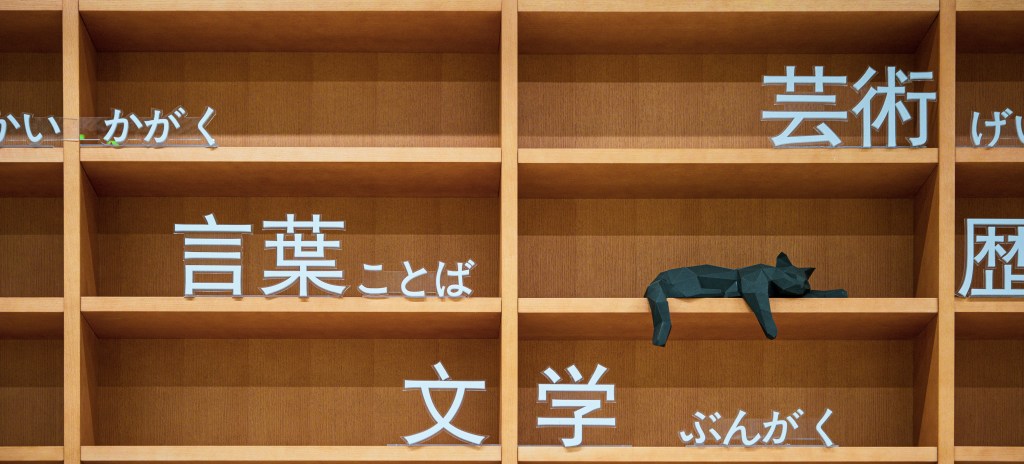
Let’s get one thing straight before we go any further: I marked beginner on my JET application for Japanese proficiency.
Not intermediate. Not conversational. Beginner.
This was, I want to be clear, an act of radical honesty—not false modesty.
My Japanese is enthusiastic, earnest, and best used in very controlled circumstances. I can introduce myself. I can ask for directions. I can order food and specify whether I’d like it hot or cold, which feels like a genuine life skill. I can say please and thank you with confidence.
I can also hold a conversation—as long as it remains extremely, aggressively polite and does not wander too far from the topic of directions or beverages.
Beyond that? We’re in uncharted territory. Proceed with patience.
The Apps I Use (And Why I Use Them)
Here’s what my week actually looks like 🎌:
Duolingo — my daily baseline. It’s interactive, game-like, and somehow tricks my brain into practicing vocabulary without feeling like homework. Will it make me fluent? No. Does it keep Japanese present in my brain every single day? Absolutely.
No notes. Ten out of ten.
Rosetta Stone — full disclosure: I’ve seen this from the other side. I worked as an American English tutor for Rosetta Stone to get some practice using my TESOL minor, so when I say it’s effective, I mean it. I’ve watched it work.
Now I’m the student, and it is humbling in the best possible way.
~Rosetta Stone, if you’re reading this—hi, hello, I’m thankful.
Instagram Reels — yes, really. I follow accounts that quiz vocabulary and listening comprehension, and it works surprisingly well for keeping things fresh between study sessions. It also makes my algorithm deeply confused about who I am as a person, which I enjoy.
Renshuu — this one fills in the gaps. Vocabulary, kanji, grammar, listening—it’s all there. I use it throughout the week to figure out what’s actually sticking versus what I only think is sticking.
Minna no Nihongo — this is the real workout. If Duolingo is the warm-up, this is the part where I realize I have made bold choices with my life. It’s a classic textbook series used in language schools worldwide, and it doesn’t play around. I love it—but I am absolutely open to more textbook recommendations, so if you have one, please send it my way.
What Has Surprised Me About Learning Japanese
I knew Japanese would be challenging. I did not fully understand how challenging until I was already in it.
Three writing systems. Three.
Hiragana, katakana, and kanji—each with their own rules, logic, and a specific ability to make me stare at a page and reconsider my decisions. You don’t just learn to read Japanese. You learn to read it three different ways, often all at once, often in the same sentence.
And then there are the levels of politeness.
Japanese builds social hierarchy directly into grammar. The way you speak to a friend is fundamentally different from how you speak to a teacher, a stranger, or someone older than you. It’s not just vocabulary—it’s structure. It’s respect, embedded into the language itself.
It’s fascinating. It’s complex. It is, to put it gently, a lot. To put it honestly — I sat with a grammar chart for twenty minutes last Friday and then went to make a fun drink to keep myself going. What drink you may ask? Matcha, of course. We have to stick with the aesthetic.
But here’s the part that keeps me going—on the days when kanji flashcards make me consider lying face-down on the floor:
This complexity is exactly what drew me to Japanese in the first place.
The layers of meaning. The nuance. The way language carries culture inside it. This is what my PhD research will be built on—the way Japanese shapes characterization in popular culture, how emotion and personality live in specific word choices and sentence structures.
The deeper I go into the language, the richer that work becomes.
Also, for the record, I still watch and listen to InuYasha on repeat, nerding out in the most linguist-approved way. And if you’re wondering who’s responsible for this nerd-level obsession, it’s Dr. Taylor—major thanks for introducing me to linguistics and the joy of spirals.
Where I’m Going From Here
Beginner level. Enthusiastic beginner level.
Learning every day. Embarrassing myself regularly. Celebrating small wins loudly and without shame.
If you’re also learning Japanese—whether you’re a fellow JET applicant, a language enthusiast, or just someone who heard a theme song at 2am and made some life decisions—I’d love to hear what’s working for you.
Drop your favorite apps, textbooks, or study routines in the comments. I’m always looking for ways to make this slightly less chaotic.
One syllable at a time. 🌸
— Katherine, somewhere in Arkansas, waiting on an email ❤

 Lost in Translation